
The Discipline of Looking
Across the River and into the TreesThis flow traces Cantwell’s habit of observing landscapes, people, and objects, showing how attention becomes both pleasure and a way to manage fear.
increasing Bearing strength in each event
 decreasing
Bearing strength in each eventdecreasingReading the Road

Reading the Road
Landscape remembered
Cantwell compares the roads and fields before him with the terrain he crossed as a young soldier. He notices how age, improved roads, and memory alter distance.
Attention as survival
His way of seeing remains shaped by military habits, including awareness of ditches, bridges, and cover. The landscape offers beauty, but never entirely loses its tactical meaning.
Studying the Water
Studying the Water
Movement watched closely
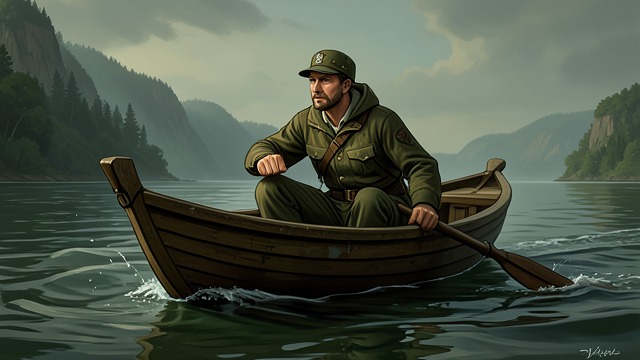
Cantwell observes currents, posts, bridges, and the motor’s performance as the launch moves through the canals. His attention is precise and practical.
Beauty without decoration
He rejects the idea that boats are merely picturesque. Their form and movement are beautiful because he understands how they work.
The Market as Museum
The Market as Museum
Looking at food
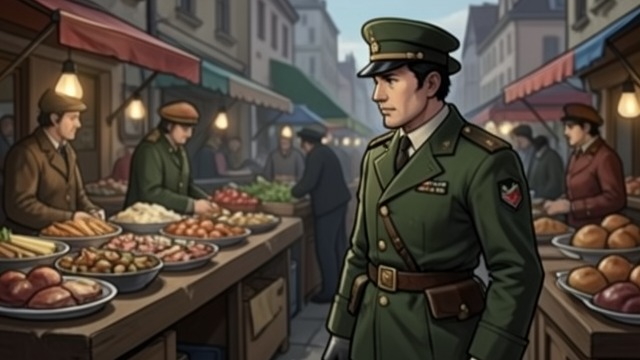
Cantwell studies cheeses, sausages, fish, and shellfish in Venice’s markets. He treats the market as a living collection of form, color, and local knowledge.
Pleasure through attention
The detailed looking grounds him in ordinary life and gives him a task beyond military recollection. Eating and observing become small acts of participation in the city.
Reading Faces

Reading Faces
Judgment and projection
Cantwell studies a stranger’s face and invents comparisons that reveal his own suspicion and wit. He sees people with the same intensity he brings to terrain.
The danger of certainty
His judgments may be perceptive, but they can also become cruel or presumptuous. Renata asks him to leave the stranger alone and redirects his attention toward their conversation.
The Portrait in Daylight
The Portrait in Daylight
A closer look
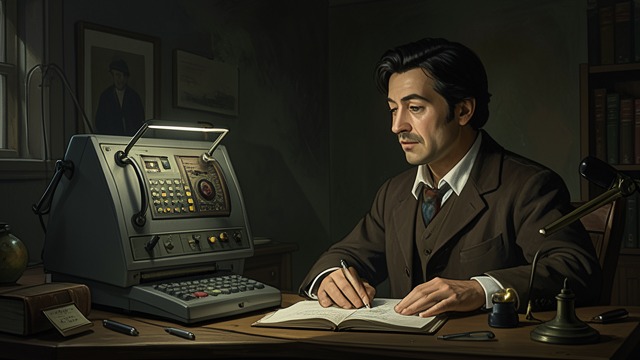
Cantwell views Renata’s portrait in changing light and compares it with the living woman. He notices both its beauty and its limits as a likeness.
Looking as attachment
The portrait gives him a focus for longing, but he knows that a painted face cannot return his gaze. Seeing clearly deepens both his appreciation and his sense of absence.
During the drive from Trieste
During the launch ride through Venice
Early the morning after his first night
During the first evening at Harry’s Bar
The morning after the portrait is delivered
